Seasonal & Festive Thanksgiving Herb Stuffed Turkey
Highlighted under: Holiday Flavor Classics
As Thanksgiving approaches, I find myself reminiscing about the cozy gatherings we shared around the dinner table with family. This year, I absolutely had to create a stuffed turkey that brings together seasonal herbs and flavors that sing with every bite. The best part? It's not just about filling the turkey, but also filling our hearts with warmth and joy. Trust me, this dish has become a staple that transforms our holiday celebrations into something truly memorable.
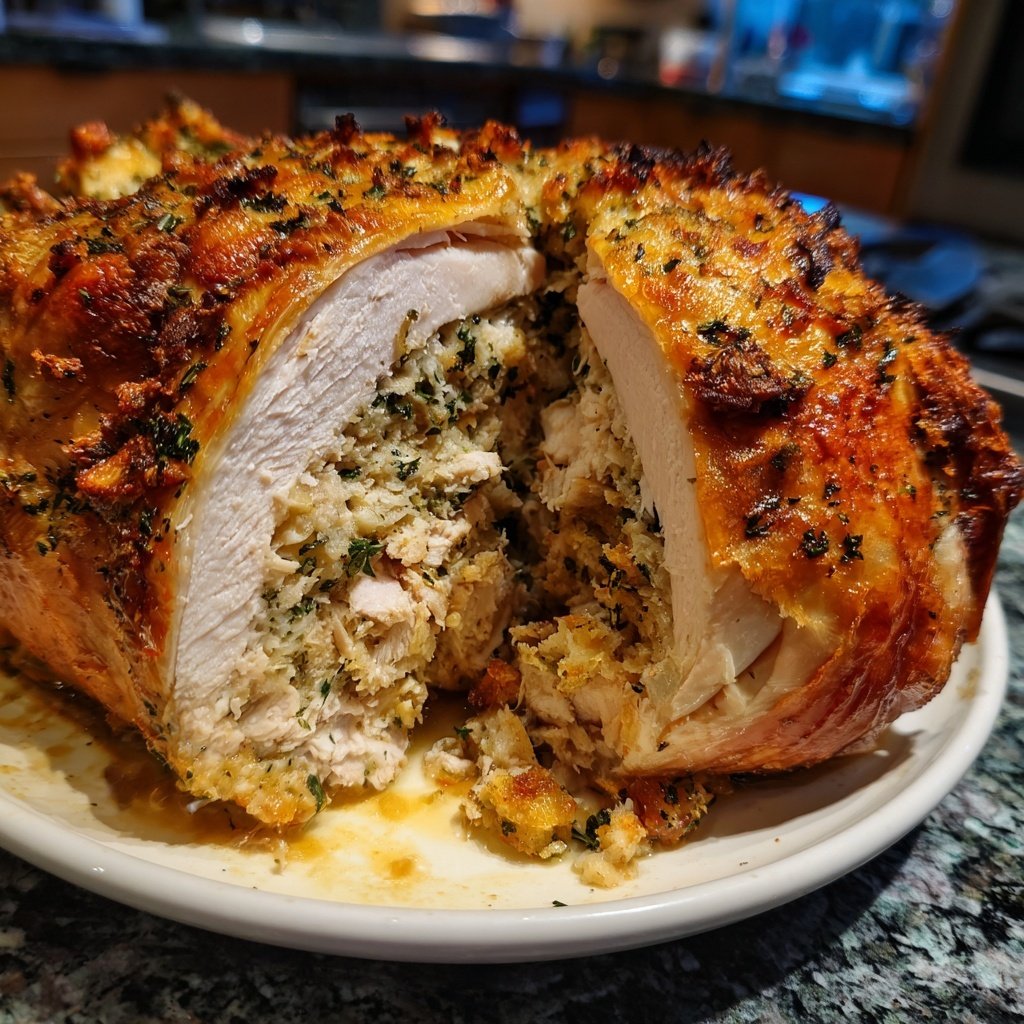
Growing up, turkey was always the centerpiece of our Thanksgiving table, but I wanted to elevate our family tradition with this herb stuffed turkey that emphasizes seasonal flavors. I experimented with a blend of rosemary, thyme, and sage that pairs perfectly with the moist turkey meat. The stuffing absorbs all the delicious juices, creating an unforgettable richness. Remember, the right herbs can truly make or break the dish, so don’t skimp on fresh!
This stuffing is a versatile mix; I love adding cranberries for a touch of sweetness. The combination provides a perfect contrast to the savory turkey. A critical tip to keep the turkey juicy is to use a meat thermometer. Cooking it to 165°F ensures everything turns out perfect and avoids the dreaded dry turkey surprise. You will love how this simple approach results in a stunning and flavorful holiday meal!
Why You'll Love This Recipe
- Succulent turkey with a savory herb stuffing bursting with flavor
- A captivating aroma of seasonal spices that fills the kitchen
- An impressive centerpiece for Thanksgiving gatherings or festive occasions
Choosing the Right Turkey
When selecting a turkey for stuffing, aim for a bird weighing between 12 to 14 pounds to ensure it feeds a good number of guests while providing a generous amount of tender meat. Fresh turkeys are ideal, but a frozen turkey can also work well. If using frozen, be sure to allow ample time for thawing—typically 24 hours for every 4-5 pounds in the refrigerator. An adequately thawed turkey leads to even cooking and a juicy texture, which is crucial for your herb stuffing to shine.
Do not skip the step of patting the turkey dry before seasoning. This minor yet essential task ensures that the butter adheres properly, creating a golden, crispy skin as the turkey roasts. Consider using a combination of both salt and pepper to enhance the natural flavors. Salting liberally both inside and out infuses every bite with flavor, while also brining the turkey to maintain moisture during the roasting process.
Mastering the Stuffing Technique
The key to a flavorful stuffing is the choice of bread and its drying process. Stale bread absorbs moisture from the broth without becoming mushy. If your bread is fresh, simply spread the cubes on a baking sheet and toast them in the oven at 300°F (150°C) for about 10-15 minutes, or until lightly browned. This method creates the perfect texture—crispy outside while still absorbing the delicious flavors of herbs and broth on the inside.
When sautéing the vegetables, ensure they cook down until soft and fragrant—about 5-7 minutes should do it. This step not only brings out their natural sweetness but also enhances the overall flavor profile of the stuffing. Finally, don’t be afraid to customize the nuts and dried fruits based on your preference; swap walnuts for pecans or cranberries for raisins to make it uniquely yours. Remember, variations can keep this traditional dish exciting!
A common issue when stuffing the turkey is overpacking the cavity, which prevents even cooking. To avoid this, gently fill the cavity without tightly compacting the stuffing, allowing steam to circulate during roasting. This ensures that both the turkey and stuffing cook uniformly, providing a moist stuffing that complements the bird perfectly.
Finishing Touches and Storage Tips
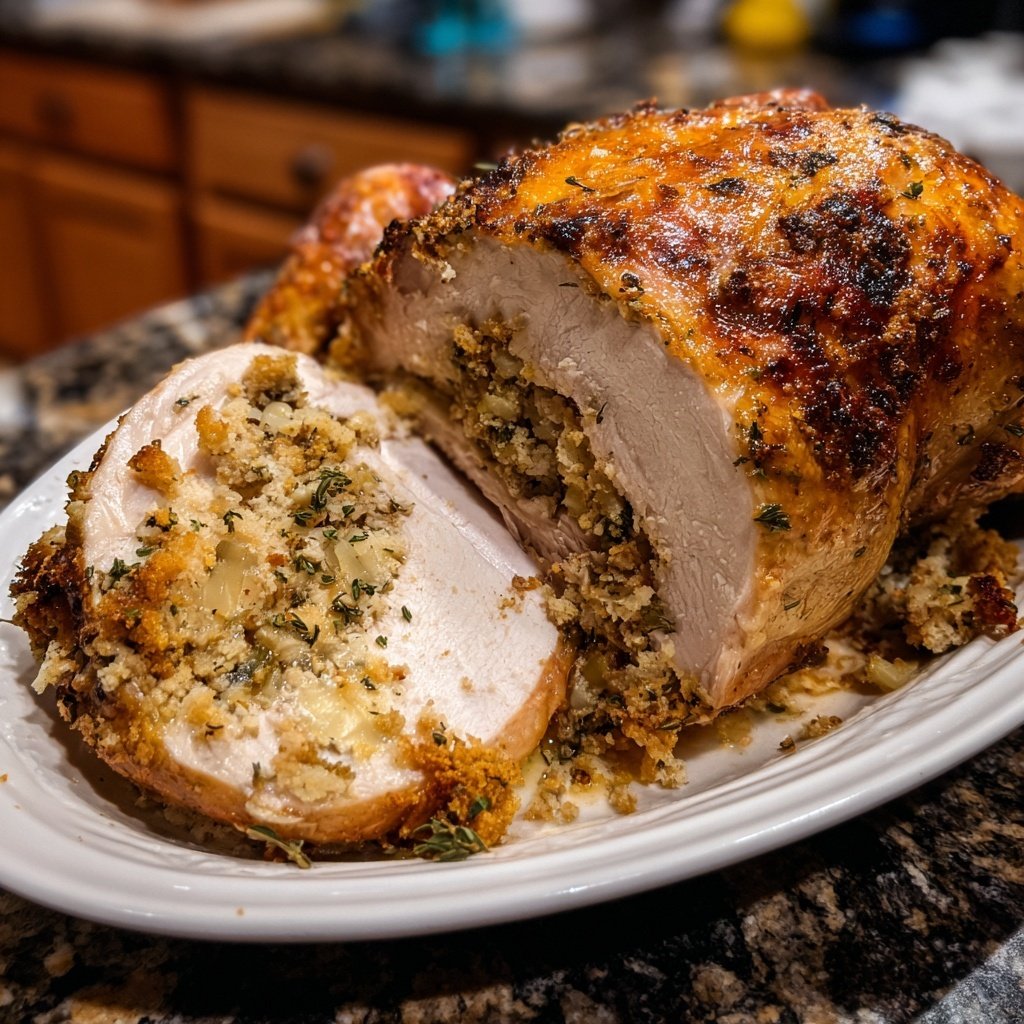
Once the turkey has rested after roasting, it’s essential to carve it correctly to maintain its juiciness. Begin by removing the legs and breasts in one complete piece, slicing across the grain for tender slices. Serve the stuffing both inside and alongside the bird for an impressive presentation that allows everyone to enjoy the savory flavors equally. I love to garnish with additional fresh herbs to enhance the aesthetic and aroma—it’s little touches like this that make a festive dish feel complete.
If you have leftovers, both turkey and stuffing can be stored separately in airtight containers in the refrigerator for up to four days. For longer storage, consider freezing the stuffing in individual portions—just be sure to cool it completely before placing it in the freezer. When reheating, add a splash of broth to moisten it, and reheat in the oven at 350°F (175°C) until heated through, ensuring it regains that tender texture.
For those who want to be proactive, the stuffing can also be made a day in advance. Just store it in the refrigerator and stuff the turkey just before roasting. This adds convenience to your preparation, especially on Thanksgiving day—leaving you more time to enjoy the company of your loved ones rather than rushing to get everything done!
Ingredients
Gather these fresh ingredients for a standout turkey:
For the Turkey
- 1 whole turkey (12-14 lbs)
- 1/2 cup unsalted butter, softened
- 2 cups vegetable or chicken broth
- Salt and pepper, to taste
For the Stuffing
- 4 cups cubed bread (preferably stale)
- 1 cup onion, chopped
- 1 cup celery, chopped
- 1 cup mushrooms, chopped
- 1/2 cup fresh parsley, chopped
- 2 tablespoons fresh rosemary, chopped
- 2 tablespoons fresh thyme, chopped
- 2 tablespoons fresh sage, chopped
- 1 cup dried cranberries (optional)
- 1/2 cup walnuts or pecans, chopped (optional)
- 2 large eggs, beaten
Mix everything well for a delicious stuffing!
Instructions
Follow these steps for a perfectly roasted stuffed turkey:
Prepare the Turkey
Preheat the oven to 325°F (165°C). Remove the giblets from the turkey cavity and pat the turkey dry with paper towels. Rub generously with softened butter, then season inside and out with salt and pepper.
Make the Stuffing
In a large skillet over medium heat, melt some butter and sauté onions, celery, and mushrooms until soft. Mix in the herbs, bread cubes, cranberries, and nuts, then stir together with the beaten eggs and enough broth to moisten. Fill the turkey cavity with the stuffing.
Roast the Turkey
Place the stuffed turkey on a rack in a roasting pan. Add more broth to the bottom of the pan to prevent drying out. Cover the turkey with foil and roast for about 2 hours, then remove the foil and cook for an additional hour or until internal temperature reaches 165°F (74°C).
Rest and Serve
Once the turkey is cooked, take it out of the oven and let it rest for at least 20 minutes before carving. This helps retain the juices for a tender turkey.
Serve the turkey with your favorite sides and enjoy the holiday!
Pro Tips
- For the best flavor, let the stuffed turkey rest overnight in the refrigerator after seasoning it. This allows the spices and herbs to penetrate the meat for maximum flavor.
Ingredient Substitutions
If you’re looking for a gluten-free option, consider using gluten-free bread for the stuffing. Be sure to check that any additional ingredients, like broth or seasonings, are also gluten-free. Additionally, for a lower-carb choice, you might substitute traditional bread with cauliflower rice, which offers a new twist to the stuffing while maintaining a delightful texture.
For those wanting to reduce fat content, you can substitute the unsalted butter with olive oil. Use about 1/3 less olive oil compared to butter since it's more concentrated. It will still provide a lovely flavor and help season the turkey perfectly. You can also skip the creaminess by reducing or omitting the nuts, but they do add a welcomed crunch that enhances the overall mouthfeel.
Serving Suggestions
This Thanksgiving Herb Stuffed Turkey pairs wonderfully with classic sides like creamy mashed potatoes, garlicky green beans, or roasted Brussels sprouts. For an elegant touch, serve a homemade cranberry sauce or a rich gravy made from turkey drippings. These traditional accompaniments complement the herbal and savory notes of the turkey, creating a balanced meal that satisfies every palate.
Don’t forget to offer a selection of wine that can enhance the flavors of the meal. Rich white wines like Chardonnay or a light red like Pinot Noir work well to complement the herbs and spices used in the turkey. Also, consider creating a festive vibe by preparing fun appetizers or cocktails beforehand, making your gathering feel special right from the start!
Troubleshooting Common Issues
If you find your turkey meat isn’t browning as expected, check your oven temperature with an oven thermometer. Sometimes the setting may not match the actual temperature inside, affecting the cooking process. To ensure a golden-brown crust, you can also baste the turkey with its own juices every 30-40 minutes after removing the foil. This additional care boosts flavor and enhances the visual appeal.
In case the stuffing remains too wet after baking, it could be due to overly moist bread or too much broth. Next time, reduce the amount of liquid added or increase the baking time to allow more moisture to evaporate. Conversely, dry stuffing can be remedied by adding more broth back in during the reheating stage, making the whole dish salvageable and delicious!
Questions About Recipes
→ Can I prepare the stuffing ahead of time?
Yes, you can prepare the stuffing a day in advance, but stuff the turkey just before cooking to keep it safe.
→ What can I use instead of bread for stuffing?
You could use cooked rice, quinoa, or cornbread as alternatives to bread-based stuffing.
→ How do I know when the turkey is done?
Use a meat thermometer; the internal temperature should reach 165°F for safety.
→ Can I cook the turkey without stuffing?
Yes, you can roast the turkey without stuffing. Just be sure to adjust the cooking time accordingly.
Seasonal & Festive Thanksgiving Herb Stuffed Turkey
Created by: Adele Summers
Recipe Type: Holiday Flavor Classics
Skill Level: Intermediate
Final Quantity: 8 servings
What You'll Need
For the Turkey
- 1 whole turkey (12-14 lbs)
- 1/2 cup unsalted butter, softened
- 2 cups vegetable or chicken broth
- Salt and pepper, to taste
For the Stuffing
- 4 cups cubed bread (preferably stale)
- 1 cup onion, chopped
- 1 cup celery, chopped
- 1 cup mushrooms, chopped
- 1/2 cup fresh parsley, chopped
- 2 tablespoons fresh rosemary, chopped
- 2 tablespoons fresh thyme, chopped
- 2 tablespoons fresh sage, chopped
- 1 cup dried cranberries (optional)
- 1/2 cup walnuts or pecans, chopped (optional)
- 2 large eggs, beaten
How-To Steps
Preheat the oven to 325°F (165°C). Remove the giblets from the turkey cavity and pat the turkey dry with paper towels. Rub generously with softened butter, then season inside and out with salt and pepper.
In a large skillet over medium heat, melt some butter and sauté onions, celery, and mushrooms until soft. Mix in the herbs, bread cubes, cranberries, and nuts, then stir together with the beaten eggs and enough broth to moisten. Fill the turkey cavity with the stuffing.
Place the stuffed turkey on a rack in a roasting pan. Add more broth to the bottom of the pan to prevent drying out. Cover the turkey with foil and roast for about 2 hours, then remove the foil and cook for an additional hour or until internal temperature reaches 165°F (74°C).
Once the turkey is cooked, take it out of the oven and let it rest for at least 20 minutes before carving. This helps retain the juices for a tender turkey.
Extra Tips
- For the best flavor, let the stuffed turkey rest overnight in the refrigerator after seasoning it. This allows the spices and herbs to penetrate the meat for maximum flavor.
Nutritional Breakdown (Per Serving)
- Calories: 550 kcal
- Total Fat: 36g
- Saturated Fat: 10g
- Cholesterol: 150mg
- Sodium: 700mg
- Total Carbohydrates: 32g
- Dietary Fiber: 3g
- Sugars: 7g
- Protein: 40g