Global Flavors Japanese Teriyaki Salmon
Highlighted under: World Kitchen Essentials
I absolutely love making Japanese teriyaki salmon at home! The sweet and savory teriyaki sauce beautifully complements the rich flavors of the salmon, making it a perfect dish for weeknight dinners or special occasions. In just 30 minutes, I can whip up a meal that not only impresses my family but also satisfies my cravings for vibrant, global flavors. Trust me, once you taste the refreshing notes of ginger and garlic paired with the luscious salmon, you'll be hooked!
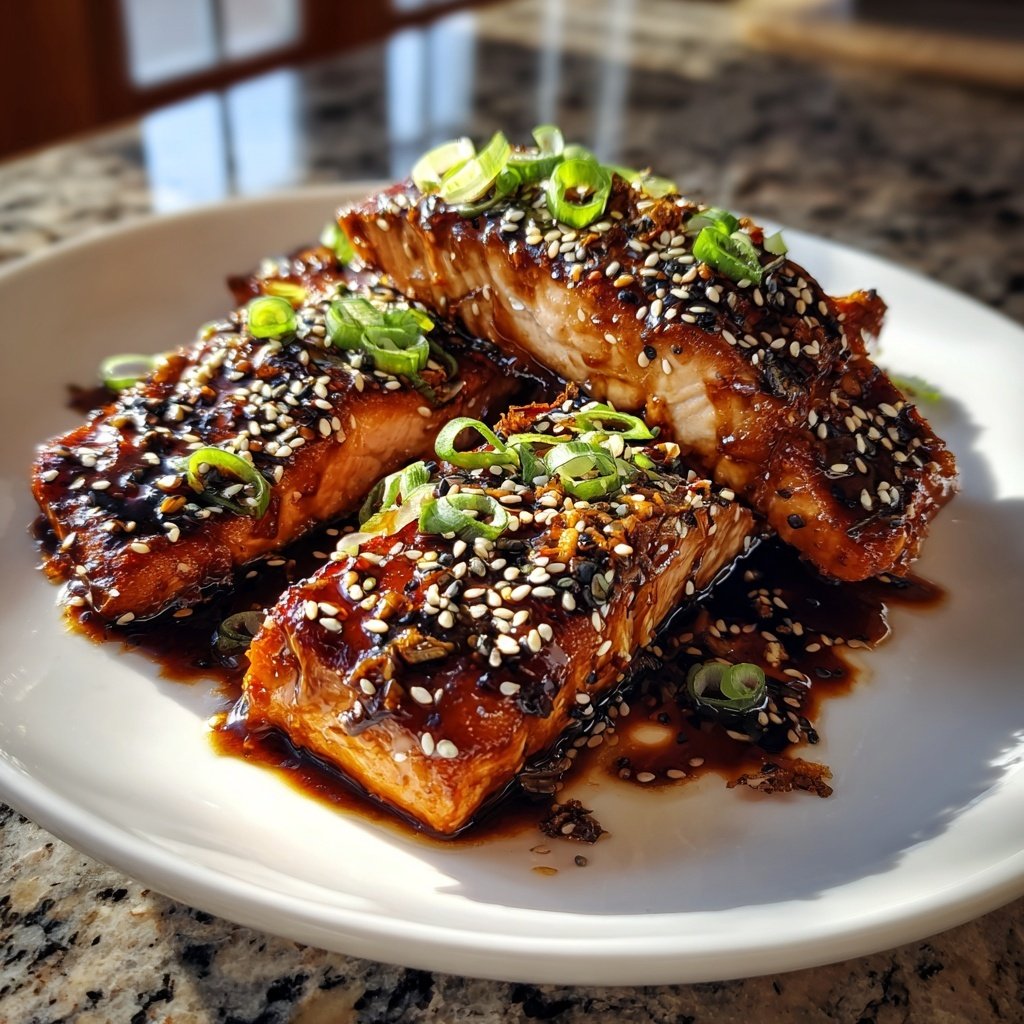
During one of my culinary adventures, I decided to bring a taste of Japan to my kitchen by making teriyaki salmon. The method involves marinating the salmon fillets in a homemade teriyaki sauce, allowing them to soak up the flavor while still retaining their natural oils. The first time I tried this, I was amazed at how simple ingredients transformed a regular meal into something extraordinary!
On my quest for the perfect blend of sweetness and umami, I found that adding a touch of honey and mirin truly elevates the teriyaki sauce. Searing the salmon skin-side down creates an irresistible crispness that perfectly balances with the tender fish. It’s an easy yet impressive dish that I can’t recommend enough!
Why You'll Love This Recipe
- Rich umami flavor from the homemade teriyaki sauce
- Quick and easy prep for busy weeknights
- Healthy source of omega-3 fatty acids from the salmon
The Art of Teriyaki Sauce
Homemade teriyaki sauce is a simple yet essential component to this dish, bringing an irresistible balance of sweet and savory flavors. Using high-quality soy sauce is crucial; it enhances the umami depth of the sauce. If you prefer a darker and richer flavor, consider using a low-sodium soy sauce, as it lets you control the saltiness without compromising on flavor.
When mixing your sauce, make sure to fully dissolve the honey in the soy sauce to avoid any clumping. The addition of mirin—a sweet cooking rice wine—adds a unique layer of flavor. If mirin is unavailable, a splash of sake or even white wine mixed with a bit of sugar can serve as a decent substitute. For an added kick, a dash of red pepper flakes can elevate your teriyaki sauce.
Perfecting Your Salmon
Selecting the right salmon fillets is key for achieving the best flavor and texture. Ideally, choose fillets that are vibrant in color with a fresh smell. Skin-on fillets not only keep the fish moist during cooking but also add a delightful crunch when seared. If you prefer skinless salmon, just reduce cooking time slightly to avoid dryness, watching for that perfect flakiness.
Cooking salmon skin-side down initially allows it to get perfectly crispy, which enhances the texture of your dish. Ensure your skillet is hot before adding the salmon; you should hear that sizzle immediately. If you find the salmon sticking, it’s often a sign that the skillet isn’t hot enough. If you suspect undercooking, just flip it back, cooking until the center reaches a light pink hue, which indicates it's done.
Ingredients
For the Teriyaki Sauce
- 1/4 cup soy sauce
- 2 tablespoons honey
- 1 tablespoon mirin
- 1 teaspoon grated ginger
- 1 garlic clove, minced
For the Salmon
- 4 salmon fillets
- 1 tablespoon vegetable oil
- Sesame seeds, for garnish
- Sliced green onions, for garnish
Instructions
Prepare the Teriyaki Sauce
In a small bowl, mix together soy sauce, honey, mirin, grated ginger, and minced garlic. Stir until well combined and set aside.
Marinate the Salmon
Place the salmon fillets in a shallow dish and pour half of the teriyaki sauce over them. Allow the salmon to marinate for 15 minutes in the refrigerator.
Cook the Salmon
Heat vegetable oil in a large skillet over medium-high heat. Once hot, add the salmon, skin-side down. Cook for about 4-5 minutes until the skin is crispy, then carefully flip and cook for an additional 3-4 minutes, brushing with the remaining teriyaki sauce.
Serve and Garnish
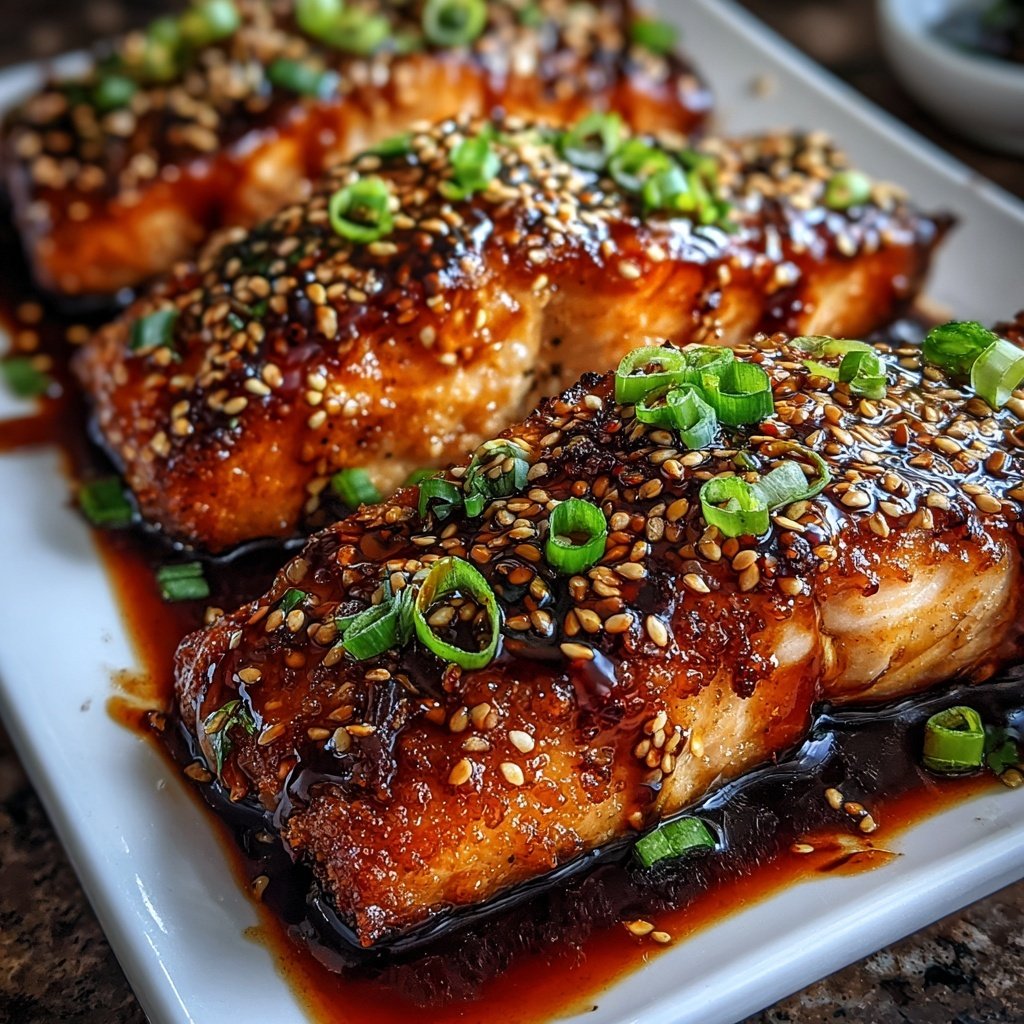
Remove the salmon from the skillet and place it on a serving plate. Drizzle extra teriyaki sauce over the top if desired, and garnish with sesame seeds and sliced green onions.
Pro Tips
- For an extra flavor boost, try grilling the salmon instead of pan-searing it for a smoky taste.
Storage and Make-Ahead Tips
If you want to prepare ahead, marinate the salmon in the teriyaki sauce for up to an hour in advance, or even overnight, which deepens the flavor. After cooking, store any leftover salmon in an airtight container in the refrigerator for up to two days. Reheat gently on a low setting in a skillet to retain its moisture.
For longer storage, you can freeze the cooked salmon. Wrap it tightly in plastic wrap and then in aluminum foil to minimize freezer burn. When ready to use, allow it to thaw in the refrigerator overnight before reheating. The teriyaki sauce will still be flavorful, ensuring a delicious meal awaits you.
Serving Suggestions and Variations
Pair your teriyaki salmon with steamed jasmine rice or quinoa for a wholesome meal. The fluffy texture of the rice soaks up the savory sauce brilliantly. Adding a side of stir-fried vegetables like bok choy, bell peppers, or snap peas can make this dish even more colorful and nutritious.
Feel free to experiment with the teriyaki sauce! Adding a tablespoon of miso paste can deepen the flavor, while a splash of orange juice will introduce a vibrant citrus note. You can also try using this teriyaki sauce on other proteins, such as chicken or tofu, for a delightful twist.
Questions About Recipes
→ Can I use frozen salmon for this recipe?
Yes, just make sure to thaw it completely and pat it dry before marinating.
→ What can I serve with teriyaki salmon?
Steamed rice and a side of grilled vegetables make great accompaniments!
→ Can I store leftovers?
Yes, store any leftovers in an airtight container in the refrigerator for up to 2 days.
→ Is teriyaki sauce gluten-free?
Regular soy sauce contains gluten, but you can use gluten-free soy sauce for a gluten-free version.
Global Flavors Japanese Teriyaki Salmon
Created by: Adele Summers
Recipe Type: World Kitchen Essentials
Skill Level: Easy
Final Quantity: Serves 4
What You'll Need
For the Teriyaki Sauce
- 1/4 cup soy sauce
- 2 tablespoons honey
- 1 tablespoon mirin
- 1 teaspoon grated ginger
- 1 garlic clove, minced
For the Salmon
- 4 salmon fillets
- 1 tablespoon vegetable oil
- Sesame seeds, for garnish
- Sliced green onions, for garnish
How-To Steps
In a small bowl, mix together soy sauce, honey, mirin, grated ginger, and minced garlic. Stir until well combined and set aside.
Place the salmon fillets in a shallow dish and pour half of the teriyaki sauce over them. Allow the salmon to marinate for 15 minutes in the refrigerator.
Heat vegetable oil in a large skillet over medium-high heat. Once hot, add the salmon, skin-side down. Cook for about 4-5 minutes until the skin is crispy, then carefully flip and cook for an additional 3-4 minutes, brushing with the remaining teriyaki sauce.
Remove the salmon from the skillet and place it on a serving plate. Drizzle extra teriyaki sauce over the top if desired, and garnish with sesame seeds and sliced green onions.
Extra Tips
- For an extra flavor boost, try grilling the salmon instead of pan-searing it for a smoky taste.
Nutritional Breakdown (Per Serving)
- Calories: 380 kcal
- Total Fat: 26g
- Saturated Fat: 15g
- Cholesterol: 195mg
- Sodium: 85mg
- Total Carbohydrates: 32g
- Dietary Fiber: 3g
- Sugars: 24g
- Protein: 6g